
We all do it. When someone asks us “how are you?”, most of us quickly reply “good, how are you?”. It’s a pretty trained and non-emotional response. Yesterday at work I passed a colleague in the hallway and he said “hello” and I responded, out of trained habit, “good, how are you?”. I did a double take and caught myself. He didn’t even ask how I was doing, but my programmed response was ready to go. Smh. Talk about not being present.
Sometimes I wonder if everyone was actually honest in their response to “how are you?”, how much more open and compassionate we would be with each others’ truths. Today I was in a meeting with coworkers, and we started out the conversation with the expected “how are you doing?”, and at first we all said that we were “fine”. But when probed a second time, and asked “how are you really doing”, the honesty came out, and we admitted that things are kind of shitty. And that is ok. It was a relief to be honest and to share, even for a moment, in union with others, that sometimes things just suck. My husband often reminds me that life is not black and white, days are not only good or only bad, and that is it ok to live in the gray. We all have shitty days/weeks/months throughout our lives, but instead of trying to run away from them, and respond with the conditioned response of “I’m good”, I believe it’s important to be honest with yourself, and with others, about how you really are doing.
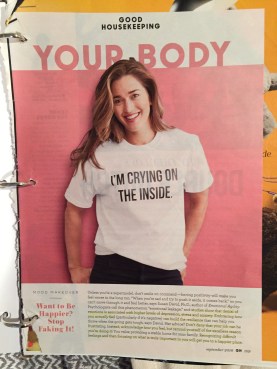 According to the article “Want to Be Happier? Stop Faking It!”, Dr. Susan David describes that “denial of emotions is associated with higher levels of depression, stress and anxiety. Embracing how you actually feel (particularly if it’s negative) can build the resilience that can help you thrive when the going gets tough” (Good Housekeeping 109).
My therapist talks to me about this same idea, the idea of acceptance and accepting what you’re feeling in order to process through it. This directly relates to our responses to the common “how are you” greeting. Now I’m not saying that I tell everyone the real truth to how I’m going every time someone asks me that question. But I do think it is important to find a support system, whether it’s one person or 10 people, that you can give an honest answer about how you are really doing. It can help you accept your true feelings and process through the shitty times.
Everyone is going through something, whether you’d know it or not. I’ve found that being more open and honest with others has helped me accept my miscarriages more and accept all of the feelings that come with building everyday resiliency. So I challenge you – next time someone asks you how you are really doing, have the courage and strength to be vulnerable and let them know the real deal. More likely than not, they can understand the shitty struggles of life right along with you. Accept your feelings, acknowledge your shared experiences, and press on. That’s what I strive to do every day.
Reference:
Want to be happier? Stop faking it! (2016). Good Housekeeping, 109.

 Pressing On